Friday, 13 July 2018

The warrior pope's road


Via Giulia is one of Rome's great historical streets. It begins at Ponte Sisto and ends a straight kilometre away at the church of San Giovanni dei Fiorentini , across the river from Castel Sant'Angelo. It was part of a 16th century urban planning project, designed by Pope Julius II (born Giuliano della Rovere) which was never finished. He intended to reorganise the chaotic Medieval city. The street was meant to connect all governmental institutions: the Palazzo della Cancelleria, the papal mint and the future Palazzo dei Tribunali to the redesigned Vatican. The job was entrusted to Donato Bramante
who at the time was working on the new Basilica of St. Peter's (also commissioned by Pope Julius). He designed a perfect straight line which to build it, meant destroying a number of medieval alleys. Not only was this new road to have gathered in one place all the important administrative offices and embassies but it was also to have provided a useful secure route for bringing in merchandise from Rome's port on Ripa Grande to the heart of the business district and onwards to the new city state of the Vatican. Alas the plan never reached completion. Work on Bramante's Palazzo dei Tribunali, which was to have put all the judiciary under one roof ground to a halt, thus scuppering the rest of the warrior Pope's projects. 
 
Starting from lungotevere dei Tebaldi, opposite Ponte Sisto seems logical as the first thing that catches the eye on Via Giulia is an elegant ivy-covered arch. Actually, it's a little way down but it invites you to explore further. I attacked it from Via dei Pettinari, a narrow street straight out of Medieval Rome leading up to Pope Julius' more modern vision.
By today's standards it's still a narrow street but at the time it was created its straight-as-a-die line would have made it a novelty. Stepping onto the Via Giulia is like stepping into a shaded tunnel as a high wall leading up to Lungotevere runs down one side and the other is wall-to-wall elegant buildings. I have to jump out of the way from time to time as small cars speed past barely an inch from my side.

I'm looking for the Fontana del Mascherone. I find it, backed up against a wall, beside the French consulat, where a group of young tourists have chosen to have a snack. The fountain, made of white marble, belonged to the Farnese family and would once have been part of a theatre. During celebrations in 1720 for the election of the Grand Master of Malta wine poured from the gaping mouth of the fountain. Above the fountain stands the symbol of the Farnese family, a lily.
Just a little bit further is the Farnese arch, designed by Michelangelo, it serves as a majestic welcome to anyone strolling onto the street, almost as if it had been intended as an entrance. It was part of another unfinished project which was to have linked the gardens of Palazzo Farnese via a bridge over the Tiber to Palazzo Farnesina. The arch must have had a recent clean up as today the usual ivy fronds are not dangling down into the street though the walls of the adjacent garden to Palazzo Farnese, home of the French Embassy, is covered in the lush green leaves.


Equally eye catching is the church of Santa Maria dell'Orazione e della Morta, just beyond the arch. It was built by a confraternity responsible for burying abandoned corpses. Images of death adorn the church reminding passers-by that people are but dust and bones. The crypt, once the cemetery of the confraternity, contained up to 8000 bodies. Today it is an ossuary where everything is made of the bones of the deceased. Outside the church beside the central door are two grisly alms boxes: one for the abandoned dead and another for the perpetual light, both feature a winged skeleton.

As my gaze turns upward I'm attracted by the falcon heads of the adjacent building, Palazzo Falconieri, named after the original owners and now home to the Hungarian academy in Rome. I continue my walk past Palazzo Baldoca Muccioli, a 16th century edifice. I cross a junction and note that I share the same name as the road before coming to the church of Santa Caterina di Siena, on the façade is the symbol of Siena a she-wolf with Senius and Aschius, the legendary founders of Siena, sons of Remus and nephews of Romulus, the legendary founders of Rome. When Romulus murdered their father, Remus, they fled Rome, one on a black horse and the other on a white horse thus came into being the heraldic colours of Siena.

It's hot on the road and I move to the shaded side. Next to the church is a noble residence, the Palazzo Varese. Further along I pass the Church of the Neapolitan Holy Spirit (Chiesa dello Spirito Santo dei Napoletani) , a mouthful of a name in any language. Historically, it was the church of worship for the Kingdom of the two Sicilies. The façade is striking enough to make me pause. The church stands beside the famous/infamous Liceo Virgilio - a two storeyed ten-windowed front looks onto Via Giulia. Term is over but the front door is open. Presumably the catch-up classes are still going on for those students who didn't quite make the 60% required pass mark in every subject.

Sunlight floods the road as the wall of buildings gives way to a building site for an underground carpark. This is followed by the Antimafia Commission, police and soldiers stand guard outside. I stroll on in the hard hitting afternoon heat. Even though the Tiber is just a few metres away no cooling breeze finds its way onto the street. 

I can see the end of Via Giulia where it opens out onto the Piazza of San Giovanni dei Fiorentini. But first there are more churches and buildings to gaze at and admire: Santa Maria del Suffragio (belonging to a confraternity that prayed for the souls of the dying and the dead), San Biagio degli Armeni aka San Biagio della Pagnotta (the national church of the Armenian community in Rome) and Palazzo Sacchetti.


Palazzo Sacchetti was designed by the architect Sangallo, in 1542, to be his residence. He aimed to make it the 'perfect building' and dedicated the last ten years of his life to the project. It was finished by his son Orazio. In 1608, it was bought by the archbishop of Naples who built a frescoed chapel. In then became the property of the Marquis Sacchetti of Florence. It is famous for its room of the globes (Sala dei mappamondi) with frescoes depicting the story of David by Francesco Salviati. But there is also a garden with a courtyard and nympheum, beautiful corridors and large terraces. Sadly, it is not open to the public except on special occasions or by appointment.

On the façade of the Palazzo Sacchetti is a small, easy-to-miss fountain, the fontana del putto. It is thought to have been built around the same time as the building either by Sangallo or, a later architect, Nanni di Baccio Biagio who worked on the building for the Cardinal of Montepulciano. The central figure of a boy is situated between two pillars and embraced by dolphins beneath a shell. The basin into which water would have
flowed no longer exists and over time the fountain has been extensively damaged.

The end of the walk is here, a kilometre down the road, steps away from the Tiber on the desolate Piazza of San Giovanni dei Fiorentini. The impressive looking church is closed with two people sitting on its steps, both consulting their phones. A lone gypsy woman passes by. I can feel the rumble from the nearby busy Corso Vittorio Emanuele. I look back down the perfect line of Via Giulia. It may not have been quite what the warrior pope had intended but it is one of the great streets of Rome with its impressive palazzi and churches which embraced different confraternities. It's also a walk through Italy: Siena, Naples, Florence, the Kingdom of the Two Sicilies, with its two capitals of Naples and Palermo, are represented here. I leave Via Giulia and plunge into the medieval warren of streets, remnants of what the area was like before Pope Julius had his way.


Wednesday, 4 July 2018

Rules, rules, rules

I was striding along, just minding my own business. I noticed the look. I didn't pay attention. I was pulling open the gate of the dog park when the stage whisper winged over the too high grasses and weeds. "Look at her, she's wearing trainers to the park." I was wearing cheap grey and white trainers. I side glanced back to catch a glimpse at my critic. I saw a middle-aged woman with small white dog and husband (?), she was staring at my feet. She then looked away, just as pointedly. What was I supposed to wear on my feet in the park?No doubt I had transgressed a sartorial rule, whether a nationally known one like 'no socks with sandals', or a self-invented one, like 'no shorts over forty', I had no idea. 


Come to think of it, it was in the same park I'd overheard an Italian woman loudly comment to another, "you can see you're a foreigner, you're wearing a T-shirt." It was on a warm morning in April. Like for so many things there are the right seasons for clothes, hence all the tut-tutting at German and other northern tourists and their shorts and sandals as early as February and as late as November. Or the frowns of disapproval upon seeing women go bare-legged under their shorts and skirts as early as May. Shock! It highlights just how uneasy-going and unrelaxed Italians can be. 

A lot of Italian life is stifled by rules. And more rules. And even more rules. Some are self-invented. Some are branded 'it's the done thing,'  the table manners guide 'il 
galateo' is a serious tome for those inclined to follow it. I've even had parts of it quoted to me by teenagers who have had it rubbed into them by their parents. 
Non fare la scarpetta, using a piece of bread to mop up the sauce is a rule destined and begging to be broken. Just don't do it in the wrong place. 

Some rules date to less modern times, but are still applied even if selectively. Hence, for a brief while all animals 'except seeing eye dogs' were banned from the lift on my side of the building. The rule dated from the fifties, had never been observed or even mentioned (I live on the 4th floor with a dog so would have noticed) but had been brought into application following a spat between two flat owners. The spat had nothing to do with dogs, by the way, but was about a drop of water leaking onto a balcony. Thus to inconvenience the leaker, owner of 2 dogs, the rule was resurrected. And  just as quickly died. As was pointed out banning all animals effectively meant no one could use the lift. I pictured the lone guide dog, paws on the dirty linoleum floor, reflected in the grubby mirror, stuck waiting on the ground floor to go up all alone and unaided as the neon light above it flickered on and off, in the way they do in horror movies.


It must be said condominium blocks are palaces to insane, inane rules. Maybe other countries are like this? A friend discovered by transgressing that in her block no one could hang their sheets to dry over the edge of the balcony but in the block opposite, part of the same complex but under different management, the tenants could. 

I went online to find out more about the condominium rule book: a hefty volume which bore nothing in common with the rather obvious and anodine rules I had been shown when I signed my rental contract. 

Condominium rules, it seems, are established by law and at condominium assembly meetings. In large condominium complexes the different blocks may be managed by different administrators leading to different state of law for all. It's a schizophrenic system which ignores the concept of fairness or logic. 

In the case of disputes, numerous in such a litigious country as Italy, the Justice of the Peace will make the final ruling. One wonders how he will decide should the current spat brewing in my building, that is people throwing liquids such as oil (how has this been established?) off the high floors as well as nut casings onto lower floor awnings, escalates.

Italy has so many rules that no one knows them all. Rule books get bigger and bigger as more are created. Creativity is alive and well in Italy today in the form of a rule book. Some rules make sense and some are pointless - much like the bureaucracy. In some cases they may not even be coherent.

Some to be fair, are not just in Italy, after all a lot of countries have their rules and 'good manners' guidebooks and lists.  Don't swim after lunch was one that was oft repeated in my youth. The modern modified version being: don't swim after lunch unless you go immediately after. So the moment that last bit of sand covered pasta has gone down rush into the sea before the digestion process starts. You'll be safe (or so you think).

As I walk down the aisles of my local supermarket another place where rules proliferate like mushrooms out of muddy soil in an autumn forest, on a loop comes the message: "wear the mono-use gloves (guanti mono-uso) provided when handling fresh produce, it is severely forbidden (tautology) to take photos in the shop, you may not use personal bags or trolleys to shop…."  I live dangerously and pick an onion with ungloved bare hands. I wonder, what happens now? Am I going to be arrested? 


Tuesday, 26 June 2018

Exploring the Esquiline

The Esquiline stands the tallest and most extensive of Rome's famed seven hills of origin. To the modern day visitor it is associated with the hub of chaos and noise that is Rome's central station - Roma Termini - and it is home to Rome's ethnic market, once on Piazza Vittorio, now inside a more recent edifice round the back of Piazza Vittorio. Even though it is called Nuovo Mercato Esquilino, it is no longer so 'nuovo', as it moved to the site over ten years ago.
The area is known for its many Indian, Chinese, Korean and Thai restaurants which sit alongside some of the cities cheapest (but not very good) tourist restaurants. 

My first foray into the district was over twenty years ago when following the advice of my backpacker's guide book I sat down for dinner at one of the latter. The service was fast, the food unexceptional and, just as the guide book said, the bill was totted up on the paper tablecloth. It was cheap though. 

Aside from being an excellent place for food, Rome's mercato centrale, was recently opened in a renovated side hall of Termini station, the Esquiline also comprises the Basilica of Santa Maria Maggiore, Santa Croce in Gerusalemme, the remains of the Aqueduct of Nero which provided water for his Golden Palace (Domus Aurea), Porta Maggiore and Porta Tiburtina, the temple of Minerva Medica on Via Giolitti as well as the largest porticoed square in Rome on Piazza Vittorio where in the summer a three-screen open air cinema is set up.

There was a cool breeze blowing when I got out of the metro at San Giovanni as well as an ominous cloud covered sky offering the promise of rain. First things first, I got a quick snack to eat in the narrow park that ran alongside the city walls, the Aurelian walls named after the Emperor Aurelius, from Porta San Giovanni to the Basilica of Santa Croce in Gerusalemme. 

This being the year-of-the-immigrant a number of them were lying on benches or on the straw-like grass, which I've always figured must be itchy to lie on (not to mention all the bugs). I passed an elderly Italian who was enjoying an al fresco pee as undoubtedly was his dog. I watched the pigeons flutter in and out of perches on the city wall and ate my surprisingly tasty tuna, egg and lettuce pre-packed oily bread sandwich. Someone in the manufacturing process had come up with the idea of adding a squeeze of lemon to pick the flavour up. 

Sandwich polished off and bird watching bored, I moved on. I passed the dog play area where a black and white setter was cavorting around. It was opposite the deserted kiddy playground. Iit was just after lunchtime. I could well imagine Italian mamas' concerns over the hazards of going on a swing or down a slide as the digestive process starts. 


Santa Croce in Gerusalemme underwhelmed in terms of appearance. It stood a symmetrical block with saints atop - San Giovanni in Laterano's plainer, duller brother.However it is one of the pilgrim seven churches. Nothing tempted me to take a peek inside, but to be fair, I'm rarely attracted by the insides of churches and basilica. Too often they are displays of tacky opulence which make me wonder what happened to the poverty vow. On the piazza outside was a cute fountain with three angel heads spitting water, or at least, fitted to do so. No water was flowing. 

I passed the granatiere museum (grenadiers). There was also a fanteria (infantry) museum hidden further back. Who visited them? Maybe some nostalgic retired service men?
I strode on. The air was thick with car fumes which reminded me of something I'd read. People in big cities breathed in as much smoke as heavy smokers, mainly from exhaust fumes and other minuscule air pollutants. I was approaching one of Rome's busiest junctions. It was also an important, but neglected, Roman ruin: the grand old Porta Maggiore. 
I passed through an arch in the Aurelian walls and there standing tall and solid was the white travertine marble Porta Maggiore, originally called the Porta Praenestina because of the road that used to pass through it. It was built in 53 Ad under the Emperor Claudius at the convergence of the aqueducts Aqua Claudia and Anio Novus. Two important roads passed under the arches, the Via Praenestina, which led to the town of Palestrina, and the Via Labicana, today called the Casilina. The current Via Labicana runs between the Colosseum and the hill which comprises the Domus Aurea.
On the attic of the gate are inscribed words of praise to Claudius, Vespasian and Titus, all of whom were involved in work on the 11 great Roman aqueducts. 
In 271 the Emperor Aurelian integrated the gate into the Aurelian walls, early evidence of architectural recycling. It became known as the Porta Maggiore (Great gate) either because it is the most impressive gate in the walls or because one of the roads from it leads to the Basilica of Santa Maria Maggiore devoted to worship of the Virgin.
One of Rome's most interesting tombs stands outside the Porta Maggiore, the baker's tomb, built as a large baker's oven. It was erected in the first century by the baker, Marcus Virgilius Eurysace. He was a former slave who had bought his freedom. The tomb was intended for him and his wife. 

Nowadays Porta Maggiore is a noisy, busy traffic junction. Roads lead from it to Termini Station, to the center of Rome or outwards towards the University District of San Lorenzo and further onto the Casilina. Three tram lines cross here and the archaeological site acts as a tram stop each side serving different destinations. It is chaotic and dirty.The weedy dust that surrounds the monumental gate is strewn with all manner of litter: broken beer bottles, metal cans, plastic wrappers as well as discarded garments and lost shoes.

I head away from the gate, down Via Giolitti, the road which runs down one side of Termini Station. I want to find the Temple of Minerva Medica. I know it's up here. I pass the offices of Porta Portese, the paper that advertises just about anything. An old tram rattles disturbingly close past me. It's empty. Other than the tram and a passed out wino the road is deserted. 


The first thing I learn about the Temple is that it isn't a temple but a 4th century nymphaeum which was once mistakenly identified as a temple to Minerva Medica mentioned by Cicero. The actual temple is believed to have existed on the Esquiline but closer to Via Merulana. The octagonal structure of the nymphaeum is well preserved though the roof collapsed in the 19th century. Today it is a largely forgotten ruin stuck in an unpopular rather seedy neighbourhood. Part of it has been restructured and visible up the inside was some scaffolding.
I turn off Via Giolitti down a small tree lined road which leads onto Via di Porta Maggiore one of the large avenues which lead up to the Esquiline's most important square Piazza Vittorio. The avenue is lined by restaurants, Chinese owned clothes and shoe shops full of very little, and some of Rome's cheapest hotels. 
I tuck down the side of Piazza Vittorio onto Via Principe Amedeo where all the ethnic supermarkets are as well as some Indian restaurants. I stop off to get some Chinese chives, coriander and mange touts, this is the only place I can get them.
I return to the grandiose but dilapidated colonnade that runs around Piazza Vittorio. A sad shadow of its glorious past.

 It is the biggest square in Rome and it was built after the unification between 1882 and 1887. It was named after the first Italian king. It is made up of 280 columns and the large luxurious buildings had originally housed the dignitaries of the different Ministries in the area.
Today the vast area under the colonnades is neglected with scuffed tiles and plaster peeling from the facades of the old palazzi. 
The vast trading store Mas (Magazzini allo Statuto) has gone out of business leaving behind boarded up windows and dusty hoardings. Mas began its life at the start of the 19th century as a luxurious three floor shop with enormous crystal chandeliers. In pre-first world war times it was the shop of the wealthy bourgeoisie. Over time and as the area changed to become Rome's largest ethnic district the shop became a symbol of cut price everything and was nicknamed the temple of trash.

Many cheap Indian fast food restaurants have started up in the area adding to the piazzas run down, beat up, down-on-its-luck image. These restaurants facades are brightly, garishly plastered in photos of the dishes served within - though if the food is as bright as its pictures suggest, it might be an idea to stay clear. Under the porticoes stalls are set up selling clothes, shoes, pots and pans... a sad display in a place which had been once so magnificent.
During the edification of Piazza Vittorio extensive excavations revealed large pauper's graves from the ancient Esquiline graveyard where slaves, miscreants and assassins had been interred. To make the piazza and its gardens, churches and buildings were knocked down.
All that remains of one of the most important palazzi in the area, the Villa Palombara, is the porta magica (the magic door) - a door engraved in alchemist formulae. Beside it, like guards, stand two squat marble statues representing the Egyptian god Bes. 
It was built in the 1600s by the Marquis Massimiliano Palombara. He was part of a group called the 'alchemists of Palazzo Riario.' They gathered at the court of the Queen Regent Christina of Sweden who was a supporter of alchemy, science and great thinkers such as Descartes.

The magic door is the only one that remains of five gate doors to Villa Palombara. According to the legend the marquis met an alchemist at a dinner party who claimed he could change metal to gold with some special herbs. By morning the alchemist had vanished leaving some gold flakes as evidence of the successful transformation with an indecipherable sheet said to contain the alchemical 'recipe.'  The Marquis was unable to read the inscription so he had the recipe engraved around his doors in the hope that one day someone would be able to read and understand it. Strange beliefs still surround the door fueled by the mysterious symbol on top of it. 
Today the lone surviving magic door stands beside the remains of the nymphaeum of Severus, also a survivor as it is one of fifteen monster fountains which used to exist in Rome.


In the center of the park is a fountain by Mario Rutelli, (grandfather of a past Roman mayor, Francesco Rutelli). It has been dubbed by the locals the 'fritto misto', as it shows a man intertwined in a dolphin intertwined in an octopus but in such a way that the marine creatures are hard to distinguish one from the other. It used to stand at the center of the fountain on Piazza Esedra but was replaced. A 'fritto misto', by the way, is a typical antipasto made of battered and fried fish and vegetables such as baccala (cod), stuffed zucchini flowers etc... Try one when in Rome.
 
I crossed over into the park where a large screen had been erected for the summer outdoors cinema. Rain was imminent, the clouds were pressing down ever closer. 

.
A flock of pigeons were pecking at some bread and pizza crusts that had been tossed on the ground. As always lots of people were sitting on the benches some eating, some drinking,some listening to music or reading books. The roses were in flower. Near the nymphaeum, in a palm grove, a person was sleeping (passed out ?) on the yellowing grass. At the foot of the nymphaeum reclined some Roman street cats, safe behind the barriers that protected the monument from human predators. A grey tabby sat proud on a fallen stone.The cats had water and no doubt one of the many gattare would come and feed them. The colony was known as the cats of the porta magica as their enclosure comprised both the nymphaeum and the gate. Maybe they knew something about it that humans didn't? Who knew what went on at the darkest hours of the night? 
The porta magica half hidden away didn't look as scary, or magical, as some stories would suggest. I felt no emanations of occult forces, though I wouldn't have minded if any stone I picked up changed to gold. I could always do with some more gold in my life!
 
My walk was almost over. I left the park through one of its large black wrought iron gates. I crossed the road opposite the gaping maw of a metro A entrance. I walked under the portico to Via del Statuto past the demised Mas building. One of my favourite shops was closed for lunch, it sold all manner of pulses as well as Middle Eastern produce. Next to it was the famed Pasticceria Regoli. In the window were some tempting cakes topped with a crest of small wild strawberries or large coronas of marzipan. I was making for my last stop, large wet drops plopped out of the sky with instant soaking effect. By the time I stood outside the Basilica of Santa Maria Maggiore my feet in their sandals were soaked through. A gull seemed to be enjoying the rain alongside a crust of pizza a tourist had tossed it. I stood beside the fountain at the foot of the Column of Peace, a 14 metre column which once stood in the Temple of Peace (later Basilica of Massenzio). Up high stands a statue of the virgin. The rain was now bucketing down. The two armed soldiers standing guard on the piazza made the basilica uninviting. It would for now remain one of the umpteen places of holy worship I haven't visited yet in Rome. I crossed the road to the bus stop. I was lucky. The bus came by within five minutes.

Sunday, 17 June 2018

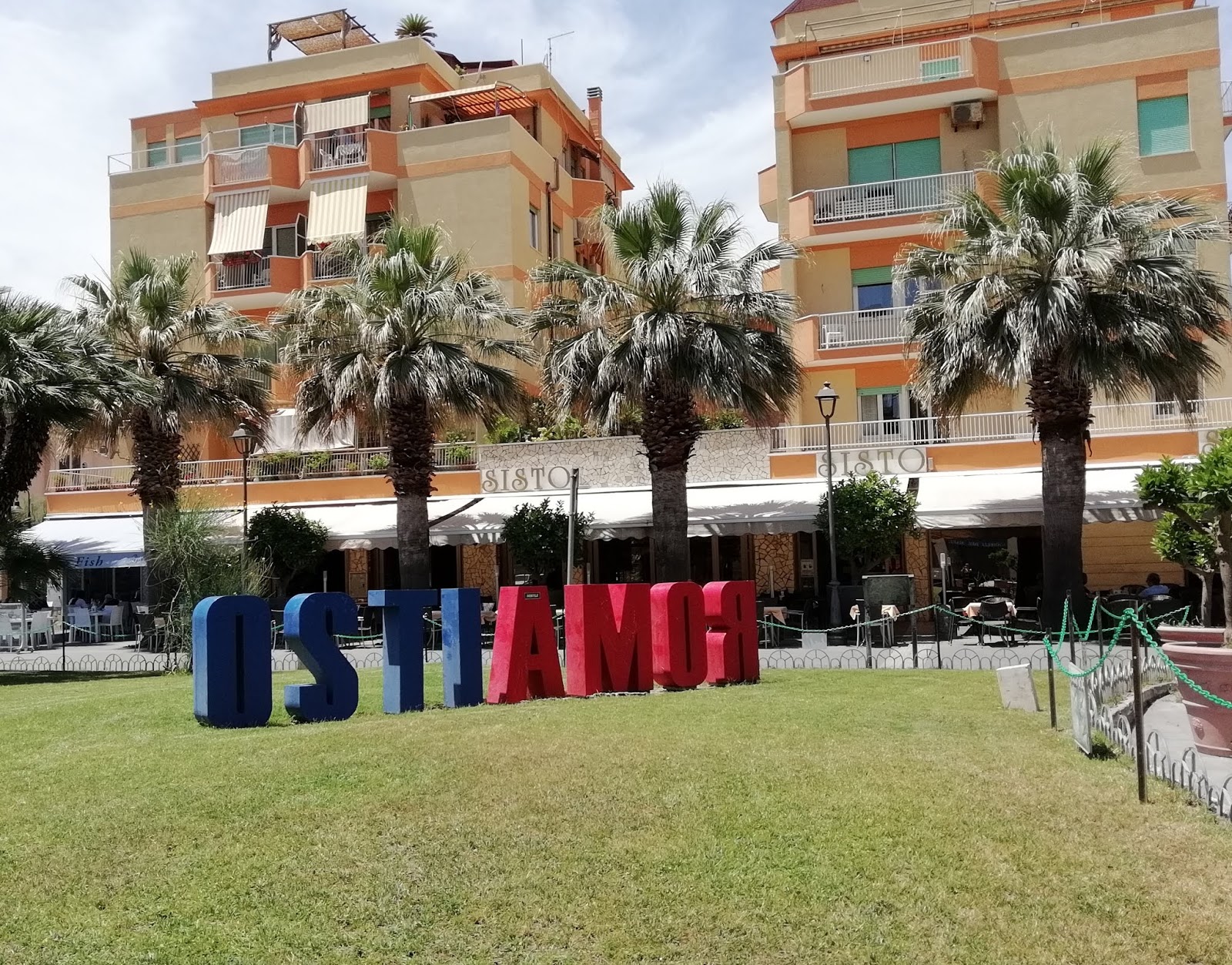
Ostia

I have never been well-disposed towards Ostia. Maybe because of an old Gerald Seymour novel, I read it before I came to live in Italy, which described only too eloquently the seediness and filth of its free beaches (also something very nasty happens to a female character there). Maybe because it's where writer/poet/film director, Pier Paolo Pasolini was murdered. It could also be because of the constant Ostia Mafia stories in the local press. 

All too evidently it could be because of the level of pollution. The mouth of the Tiber empties its filth into the sea at Fiumicino, where Rome's biggest airport is located. It pollutes the beaches along the coast causing mountains of foam on the beaches, waters so murky that your limbs become invisible as soon as you enter them, and large tides of blooming toxic algae responsible for nasty skin rashes which extend as far up the coast as Fregene. This doesn't stop thousands upon thousands of Romans from heading to the coast as soon as the hot weather hits the city. It may be, as is said of the Neapolitan and the bacteria filled water of the bay of Naples, that Romans, having grown up and every summer bathed in the waters of Ostia, are immune to whatever they may encounter there. 
Ostia is connected to Rome via a direct train line which also stops at Ostia Antica, a far more worth while place to visit than Ostia Lido. The modern town was developed in 1884 near the ancient settlement after reclamation of some  malaria-mosquito-infested marshland (the pond of Ostia). Once the train line opened  in 1924 the resort became a Roman favorite and many Art Nouveau houses were built along the sea front.

After the second world war many beach establishments (stablimenti) were built on the beach. This lead to a boom in tourism further enhanced by the opening of the Cristoforo Colombo avenue which connects Ostia to the EUR district in Rome. A road only too well-known nowadays for its high levels of fatalities. However, as of the early 1970s the effects of pollution began to be noticed and less people came to the beaches. Thus began Ostia's decline. 
Going there on a busy weekday morning, as I waited for the train at the station of San Paolo I was puzzled by the contradictory information that kept flashing up : treno fuori servizio (train not running) then followed by 'next train to Ostia:11.33'. I wasn't the only one confused. However, as there were quite a few people on the platform it looked as if the train was running. It was. At a punctual 11.39 it rolled in, reminding me of its nickname the 'misery' line. The Rome Ostia line is notorious for its frequent breakdowns, delays and at rush hour over-crowding which has lent it another unattractive nickname: 'the cattle shuttle.' Just a few hours earlier the train had been stopped for an hour between Ostia Antica and Acilia because of a 'guasto' (breakdown).
 My trip was uneventful, a slow trundle through the dusty suburbs of the city past vast clumps of overgrown weeds and grasses, some yellow grass fields and blocks upon blocks of siena, ochre, bronze buildings in differing states of disrepair.

I came out of the station underpass onto a vast piazza full of yellowing trees and dotted with bus stops. Round the square ran a covered arcade full of typical seaside shops touting beach toys, swimsuits and other sea paraphernalia as well as an ice-cream shop (gelateria), a bar and a large supermarket. I was headed seawards, basically a straight line from the central station. 
I crossed a street, walked past a closed funfair and in front of a church, Santa Maria Regina Pacis. It all looked abandoned and forlorn. Broken beer bottles and cans littered the pavement. I crossed another street in front of the town hall, the Palazzo del Governatorato: it's a vast edifice, it was built in 1924 and elaborately decorated with a dark sea-themed design all over its facade. It once housed a primary school.
I walked down a pedestrian street towards the sea front and the long line of bathing establishments. The area had been cleaned up and lots of restaurants offering various takes on sea food and fish have popped up since the last time I was there. 

 I crossed over onto the lungomare and the pontile an inelegant cement structure that extended out to sea. The water was still murky and the beaches were largely deserted. The season hadn't yet started. A lone crow seemed to be enjoying the sea breeze close to an over-tanned elderly woman who appeared to be preening herself and smiling in a way that suggested she might have been a few clams short of a bouillabaisse. A couple were taking a selfie, at least there weren't any high walls for them to fall off. I watched the waves ebbing and flowing, breaking in a foamy mass over some rocks. A lone surfer glided by. It was hot. 
I walked back towards the central square, a small fenced off path led to a tiny free beach. It looked as if the town council weren't giving away too much for free. But I knew that the larger free beaches were out of town at the cancelli (the gates) setting of a nightmarish scene in a Seymour thriller. 
In recent years, Ostia has hit the headlines only too often with Mafia related tales and scandals. Drug raids, savage attacks against reporters, drive by shootings and the like pepper the Ostian daily routine. The current Mayor, Virginia Raggi, has vowed to fight the scourge but as Ostia residents only too well know: "if you don't see anything, and you don't say anything, you've got a good chance of making it to an old age." The problem persists.


Sunday, 27 May 2018

C Line Tourist

The day was hot and humid and dull. One of those grey sky days that make me think I'll never see the sun again. It might last 12 hours, 24 hours or even longer. But, in the end, the clouds will lift and bring some welcome air.

I paid my bills at the rudest post office in the city. As if I needed more evidence of the latter, an old man was being shouted at by the manager, which made a mockery of the keep-your-distance privacy line. No one could help but hear. "No, you cannot cash that cheque. I see you have the account holders authorisation but you don't have any of her documents. You must bring....." she railed on as the old man staged a counter attack. My number pinged and I went to the till that was hidden behind a pillar.

I left the post office and walked up the street to the now tidied up junction at San Giovanni. This reminded me that the C line had finally connected with the A line. The inauguration on the 12th May had gone well, no one had hissed, booed or whistled at the Mayor as she delivered her predictable speech along the lines of a 'historic day' for the capital, 'a step towards the future,' and all the clichés that go with opening ceremonies.

People were even coming to the station to see the ancient Roman artefacts that had been excavated while the line was being built. It was a station museum.

A large moist drop of rain helped me decide. This was the historic day I would ride the C line to the end of the line at Pantano-Monte Compatri, according to my map, at the foot of the Albans hills.

I went down the stairs past the turn-stiles that led to the A line and into the clean new part of the station which was dotted with display cases. I had a brief look and noted that some of the broken ceramic dishes didn't look ancient. I took an escalator down into the depths as I descended I saw on the wall various painted markers indicating how deep I was and what that depth corresponded to in terms of Roman history.


The C line is deep down so unlike some of the shallow A line stations shouldn't flood, or at least not at the height of San Giovanni. As I discovered only the first 11 kilometres run underground while the latter 8 are above ground, and use part of an old existing railway track. Within the first weeks of opening the out lying stations, in 2014, leaks had sprung. It might have been one of the most expensive engineering projects in Europe in recent years but Rome's torrential rain had got the better of it.

I waited at the already crowded platform and noted the 10 minute frequency between trains. Was that good enough for a busy capital? The platform and track were separated by a glass wall with sliding doors. The train rolled in and the doors slid back. Passengers got off and others got on. It glided back into the dark tunnel.

The intercom wasn't working well so the voice was fuzzy announcing the stops. There were I noted 22 stops, a lot of stops. As I tried to get an idea from my phone map app of where I was heading I realised there wasn't an Internet signal. I closed the phone and sat back.
Twenty-five minutes in the train came out above ground which made things more interesting. I could look around. The sky was a shade greyer and the buildings dull. Blocks followed blocks, there were facades with peeling pink painted stucco, shabby balconies, sheets hanging out of windows, some green patches. The further we went from the centre the lower the buildings got, more and more of them looked like large converted villas that were now family-sized flats.
At a station a large screeching sound jolted me out of morose thoughts on just how dull the Roman periphery was. In the station an alarm rigged door had been opened. The same thing happened at the next station. There were no security guards that came running, in fact, most of the stations seemed deserted. Most passengers got off at the height of Tor Vergata, one of Rome's three universities. They would still have to get a bus if they wanted to reach any of the faculty buildings.
Eventually the train stopped at Pantano-Monte Compatri. I could see a line of large umbrella pines. When I reached ground level I saw they extended from the corner of a large car park. On the other side of the station was the infamous Casilina street, known for its massive traffic jams, accidents and passing through some of the city's less salubrious areas. It was raining now. There was in the end nothing to see here. The Castelli town of Monte Compatri was 6 kilometres away and there was no connecting bus.

I turned back towards the station, up the escalator and onto the platform. The next train was due in seven minutes. It was 40 minutes back to San Giovanni.
This time I sat at the front of the train. As the trains are fully-automated the front of the train is designed as a viewing platform. There's a large window and metal bar to hold on to for those who want to experience standing up the excitement of the C line metro. I sat on one of the plastic side benches. As we got closer to the center the train filled up and more passengers joined me in the carriage-with-a-view.
I noted along the way that some plants were growing inside the glass tunnel, they appeared to have forced through the seemingly clamped closed tunnel that surrounded the tracks.
Now, less than a month after the station opened at San Giovanni long predicted problems have arisen. During the rush hour passengers changing to the A line have been held up at the turn-stiles as the A line platforms have become dangerously over-crowded.
The C line project is not finished. It is supposed to connect with the Colosseum and the B line and may even one day end up on Piazza Venezia, funds allowing that is.

Tuesday, 1 May 2018

Fresh Spring Peas

People  moan that there are no more seasons. Yet, one place the seasons still exist are on the district markets. As the weather heats up the produce shifts. The winter artichokes dwindle away as the first broad beans appear. Around mid April peas will pile up on the stalls around the same time as asparagus start being discounted. There's a short window of time to make the Vignarola - Spring vegetable stew.

More and more tomatoes of different varieties take up space on the stalls: merinda, datterini, picadilly, ciliegine, canone, cuore di bue, green, red, yellow or black, smooth or wrinkled, round or oval, big or small with the queen of them all the pacchino. The plump deep purple aubergines that seem to thrive all year are joined by their slimmer counterparts. The dark winter courgettes are replaced by pale green courgettes still bearing their flowers. In another corner of the stall, large bunches of the zucchini flowers are gathered ready to be bought and stuffed for deep-fried Fiori di Zucca. The bitter leaves of the winter season get replaced by salads: small round ones, larger oval fronded Roman ones and curly fronded frisées. Spring onions and fragrant fresh garlic jostle for attention.

But what always draws my eye are the large heaps of fresh peas usually next to a large basket of fresh broad beans.To tell the truth, for many years fresh peas were not a vegetable I associated with Rome, they conjured up images of lamb with a mint sauce so very British, or the delicious p'etits pois à la française' that my mother would prepare in the late spring. I also hadn't realised that they are of the type blink and you'll miss 'em. In the Spring it's important to go to market as often as possible, skip a week and peas may all be gone!


Peas are the protagonists of  the famous 'risi e bisi' dish - the one I've dubbed the Italian rice dish that isn't a risotto. It is basically what it's name says it is, rice and peas. It is especially flavoursome if the stock used  comes from boiling the pea pods, however any vegetable stock may be used. It originates from the Veneto, the peas are the emblem of Spring while the rice symbolises fertility. It is traditional to eat it on the 25th April, the feast of San Marco.

In Puglia, in Altamura, the minestra di piselli di Altamura is made, combining peas with broken strands of spaghetti in a broth. Peas are also found in Sicilian arancini. (deep fried rice balls).  Or in various Spring soups. Or in oven baked sformati (soft moulded crustless pies) Or alongside cuttlefish. Or in Spring pasta dishes. Or with mint, even in Italy!  

After all, who doesn't like peas?